The importance of retaining and attracting nursing interns
Retaining nursing interns is now a strategic priority for the future of the profession. Faced with an alarming shortage of nurses, healthcare institutions must take action to make internships attractive and create an environment conducive to long-term commitment.
Meeting this challenge means not only improving the quality of care, but also strengthening the stability of healthcare teams. In this article, we will explore concrete levers for attracting and retaining future nursing talent: working conditions, mentoring, recognition, and digital tools.
The critical issues of the nursing shortage
The healthcare sector is facing a growing shortage of nurses. There are many reasons for this shortage: an aging population that increases the demand for healthcare, difficult and often exhausting working conditions, and a lack of recognition and appreciation for the profession.
The importance of retaining nursing interns
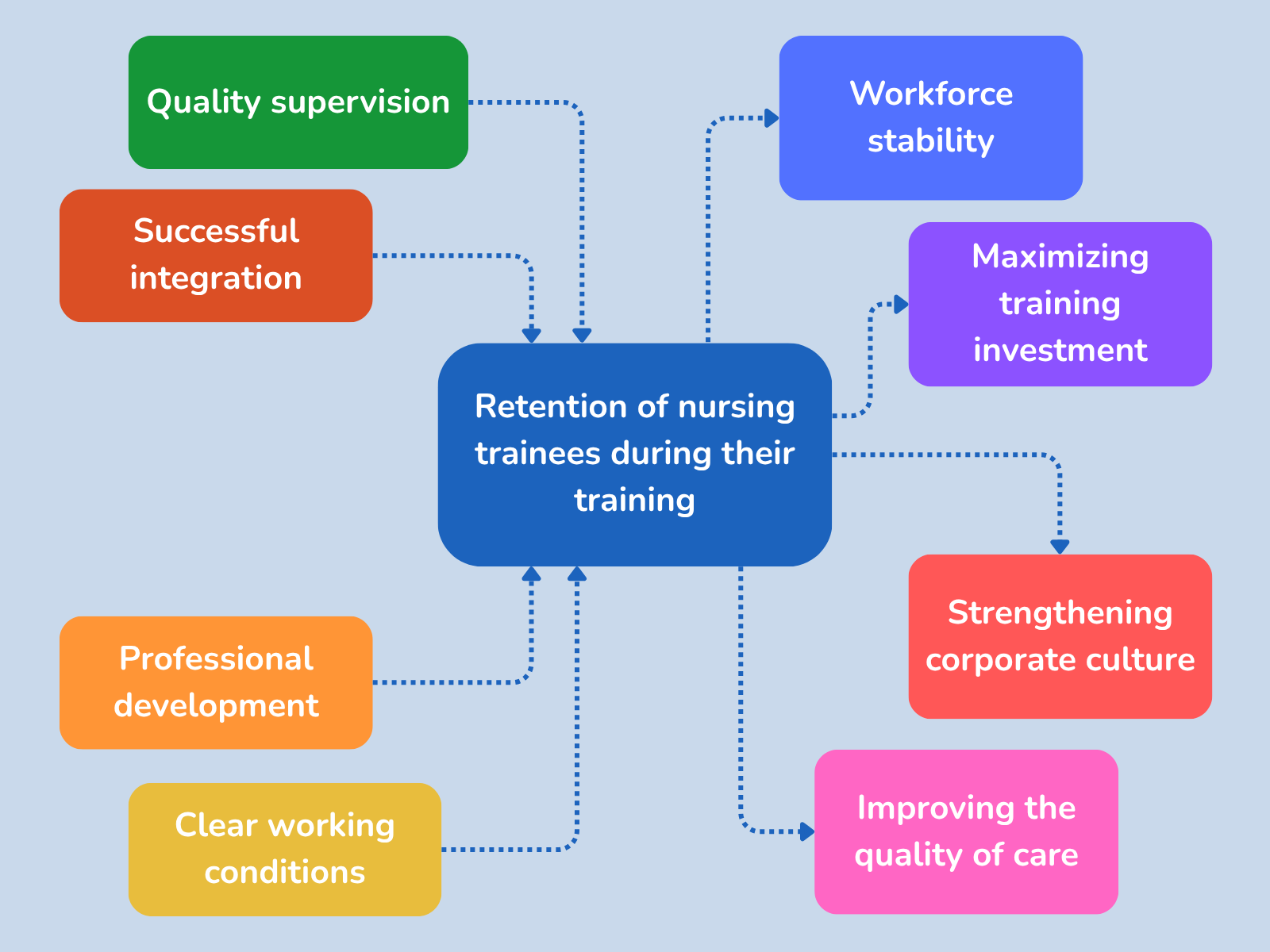
To ensure the future of the nursing profession, it is crucial to retain trainees from the moment they begin their training. Effective retention contributes to workforce stability, maximizes investment in training, and strengthens corporate culture. Trainees who remain in the same institutions after their training provide continuity and consistency that benefits both patients and colleagues.
Why retain nursing trainees from the outset of their training?
Because they represent the next generation of the profession. Early retention increases the chances that they will make a long-term commitment to their host institution.
Strategies to improve the attractiveness of nursing internships
To attract more nursing interns and encourage them to pursue a career in this field, it is essential to improve working and training conditions. Offering decent working conditions, including flexible hours, a safe working environment, and benefits, is fundamental. However, one of the most crucial aspects is the supervision and support provided to interns.
High-quality supervision by experienced professionals allows interns to feel supported and valued. Mentoring programs are particularly effective in helping interns integrate into their new environment and develop their professional skills. In addition, offering continuing education opportunities shows interns that institutions are investing in their professional development, which can encourage them to stay.
Recognizing and valuing interns’ efforts is also essential. Reward systems and career opportunities can contribute to this goal. To further improve these aspects, it is crucial to refocus healthcare on people, using appropriate tools to save time and better care for interns.
How can the attractiveness of nursing internships be improved?
By investing in supervision, working conditions, and career prospects that are visible from the start of the internship.
Supervising and supporting nursing students on internships
Effective supervision of students on internships is essential to retaining them. This includes supporting them not only in their daily tasks, but also in their professional and personal development. Appropriate tools, such as digital internship management platforms, can facilitate this task by automating certain administrative tasks, allowing tutors to devote more time to supporting interns.
In addition, refocusing healthcare on people means listening to interns’ needs, involving them in the care process, and providing them with constructive feedback. This creates a positive work environment where interns feel valued and motivated.
What is the impact of mentoring on retention?
It allows for a more human and gradual integration, reducing stress and strengthening trainees’ attachment to their organization.

Challenges ahead
Although strategies to improve the attractiveness and retention of nursing interns are promising, several challenges remain. Healthcare facilities often have to contend with limited resources, which can make it difficult to implement new initiatives. In addition, the implementation of new practices and organizational cultures may encounter resistance from existing staff. Finally, it is essential to obtain the support of leaders and healthcare institutions to ensure the success of these initiatives.
Conclusion
In summary, the retention and attractiveness of nursing interns are key elements in ensuring the future of the profession. By improving working conditions, providing quality supervision, and implementing mentoring and continuing education programs, healthcare institutions can attract and retain new talent. Overcoming the challenges associated with implementing these initiatives is crucial to ensuring a stable and motivated nursing workforce capable of meeting growing healthcare needs.