In a context where attracting and retaining healthcare workers has become a major challenge for healthcare institutions, it is essential to deploy robust organizational strategies. To respond quickly and appropriately, it is necessary to rely on proven approaches and then translate them into concrete practices.
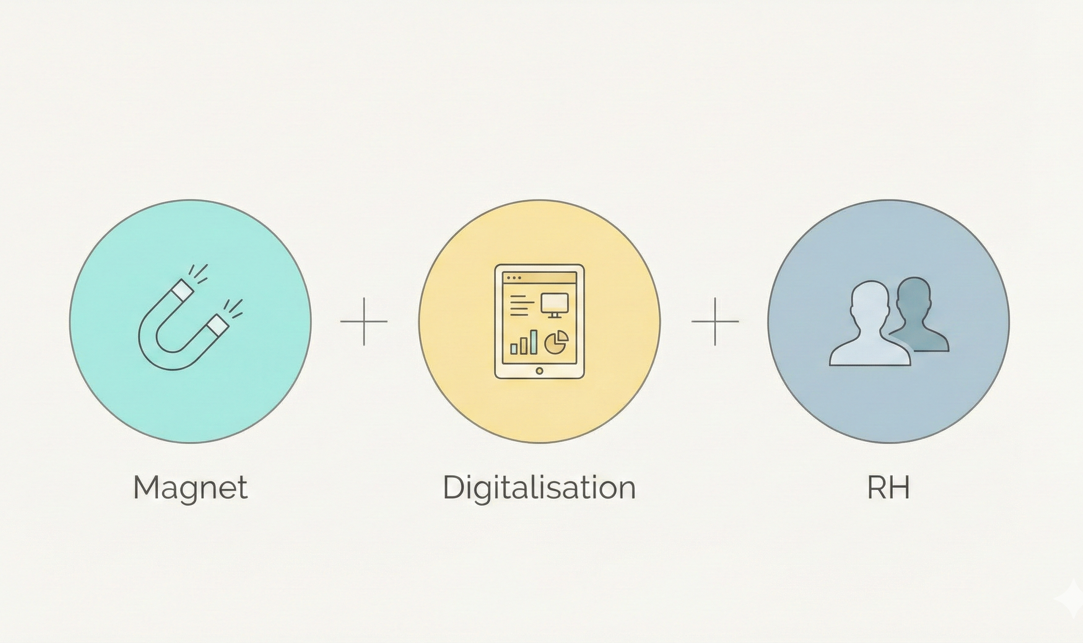
With this in mind, the Magnetic Hospital theory, also known as the “hospital where it’s good to live” model, has proven its effectiveness. It has a direct impact on human resources management and the creation of work environments that promote quality care. These benchmarks provide an operational framework for attracting and retaining healthcare workers in the long term.
Magnetic hospitals are institutions of excellence. They place the fulfillment of caregivers and students at the heart of their strategy. Their model is based on strong values: valuing skills, interdisciplinary collaboration, professional autonomy, access to necessary equipment, and a staffing ratio adapted to real needs.
When these values are combined with the possibilities of digitalization, they become powerful levers. They make it possible to more quickly build a work environment that is attentive to the well-being of caregivers, while meeting the growing demands of institutions.
Digitalization is not an end in itself. It is a means to an end. When designed to serve the field, it helps Magnet values to be embodied in daily practice. The benefits are twofold: for teams and for patients.
Why the Magnet model helps attract and retain caregivers
The central point of the Magnet model is simple: a recognized, supported, and autonomous caregiver is more committed and stays longer. This framework creates a positive dynamic in the work environment, quality of life at work, and collective performance.
Digital technology as a tool for embodying Magnet values
Useful digitalization facilitates the concrete implementation of Magnet values: coordination, transparency, better distribution of tasks, and the ability to anticipate. It structures the organization without weighing down daily life.
The impact of digitalization: task distribution and caregiver autonomy
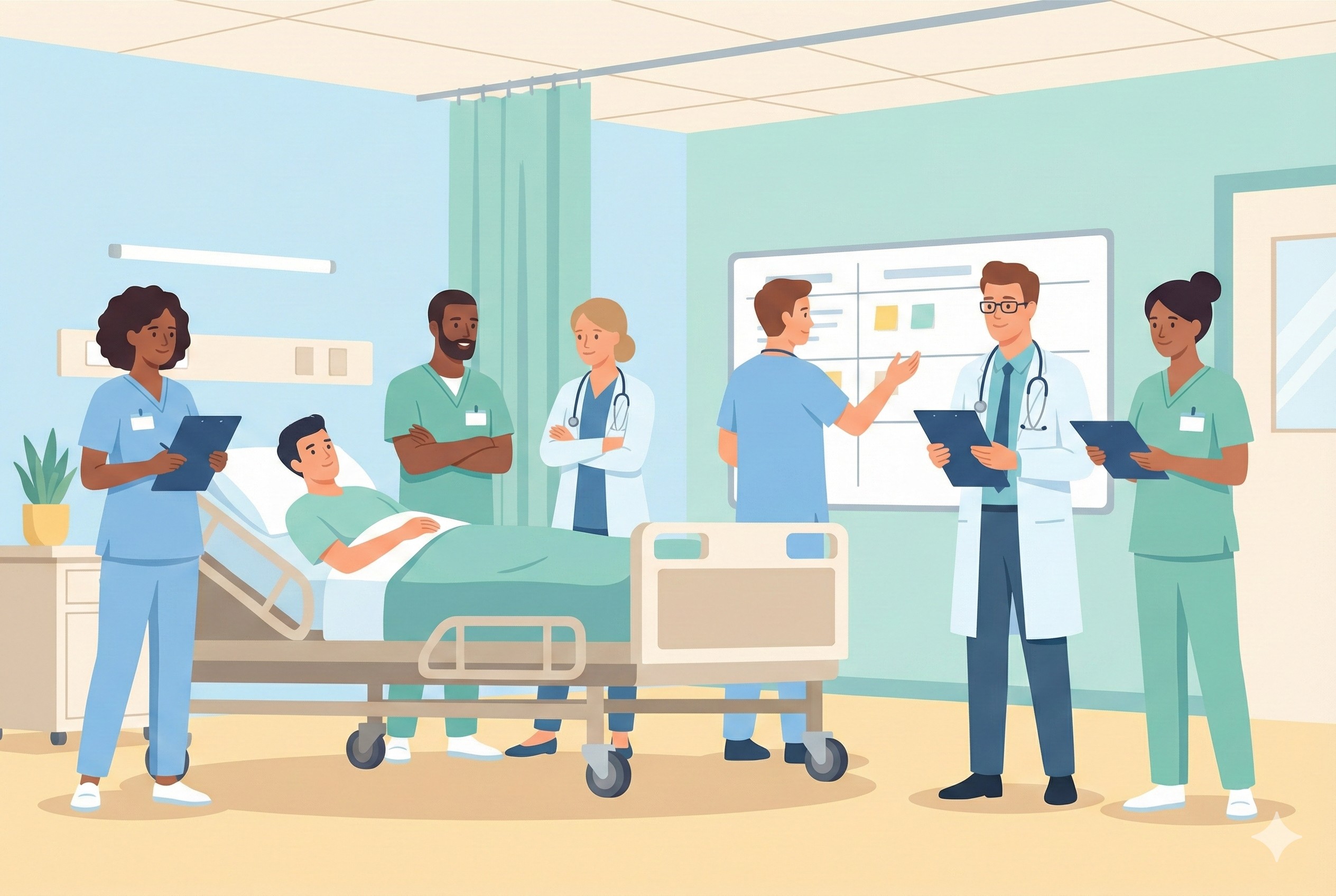
The essential prerequisite for caregiver well-being at work is structural. It consists of ensuring that the right people, in sufficient numbers and with the right skills, are in the right place at the right time. Next, an environment must be created that is capable of meeting the needs on the ground. This balance strengthens commitment, supports hospital attractiveness, and improves team retention.
Digital technology gives managers real-time visibility into department occupancy, intern staffing, and workload. This overview allows human resources to be adjusted in advance, based on the reality on the ground. The objective is clear: it is a direct lever for attracting and retaining caregivers, stabilizing teams, and limiting overload.
Digitalization also facilitates task sharing and streamlines organization. For example, information related to an intern is entered only once and becomes accessible to all relevant parties. The result: fewer duplicates, less wasted time, and a clearer sense of responsibility for each professional.
Thanks to digital tools, caregivers and students have immediate access to the information they need to organize their work. They gain in efficiency and individual decision-making capacity. A professional who is informed in real time is better prepared to respond to the needs of the department, while maintaining control over their time management.
This autonomy, combined with the provision of adequate equipment, brings institutions closer to the standards of excellence promoted by Magnet hospitals.
A Magnet hospital also stands out for its ability to recognize the value of its teams. It offers them a framework where they can express their opinions, share their experiences, and give structured feedback. Valuing the feelings and expertise of healthcare professionals thus becomes a direct driver of attractiveness and retention.
Adjusting staffing levels using real-time data
Digital visibility makes it possible to anticipate rather than suffer from peak workloads, the need for reinforcements, the distribution of internships, and team tensions. This anticipation reduces overload and improves the stability of services.
Reducing administrative burden through pooling
Repetitive tasks and re-entering data are major irritants. Effective digital tools limit these frictions and free up nursing time.
Strengthening autonomy and capacity for action in the field
Direct access to information gives teams more control over their organization, while improving coordination with managers.
An HR approach focused on the well-being and engagement of healthcare workers
Attracting and retaining healthcare workers also requires human resources management that incorporates their feedback. The feelings of professionals must become HR data in their own right. Three complementary approaches, centered on the healthcare experience, can be implemented.
An in-depth HR vision of healthcare internships
Collecting detailed data and conducting systematic surveys on trainee satisfaction provides a more detailed picture of the expectations of future caregivers. A well-being barometer for internships in Wallonia-Brussels, for example, provides operational indicators for adjusting practices. Treating students well enhances the attractiveness of institutions and secures future recruitment.
Involvement of nurses in the recruitment process
Working closely with HR, nurses can participate in the selection of their future colleagues. Their feedback on internships and the candidates they have mentored improves the screening of profiles and enhances the value of the teams. This approach, developed with the Brussels University Hospitals (HUB) group, increases the autonomy of caregivers. It also reduces the administrative burden on HR and improves the integration of new employees. Ultimately, it has a direct impact on staff retention.
Measuring workload and caregiver perceptions
Dynamic assessment of working conditions and caregiver perceptions is essential for effective HR management. A pilot project conducted at the William Lennox Neurological Hospital, for example, collects caregivers’ opinions on the work environment and workload in real time. Comparing perceived workload and actual workload provides a more accurate picture of internal tensions. This regular monitoring helps to adjust practices and, above all, prevent burnout.
Internships to attract and retain tomorrow’s caregivers
A well-supported intern becomes a committed future caregiver. Measuring and improving the internship experience is therefore an HR action directly linked to attractiveness.
Recruit with the field to ensure integration
When teams participate in recruitment, they project themselves more quickly with new arrivals. Integration is more stable, and turnover decreases.
Manage QWL with live indicators
Continuously measuring perceptions allows you to act before breakdowns occur: team tensions, overload, gradual disengagement, risk of burnout.
Conclusion
By combining the principles of Magnet hospitals with digital tools, healthcare facilities now have concrete means to create more humane and agile work environments to attract and retain caregivers. The challenge is to embrace this change and translate Magnet values into practices that are visible on a daily basis.
When designed with the field in mind, digitalization can accelerate this transformation. It becomes a catalyst for an organizational ethic that cares for those who provide care and sustainably supports the attractiveness and retention of healthcare workers.