
Required work and actual work: what discernment and what room for maneuver?
In a context of severe pressure on hospital resources, collaborative management of the workload in healthcare is becoming an ethical imperative. Guaranteeing the quality of care while preserving the health and commitment of teams is no longer an option: it is a condition of sustainability.
Organizations face a very real challenge: distributing resources fairly and in line with actual needs on the ground. This means taking into account work rhythms, constraints, unforeseen events, and emergencies.
How can we ensure that each department has the right number of caregivers, students, and external support staff, in the right place, at the right time, with the right skills… without pushing teams to their limits? The answer cannot be purely financial. It must optimize without dehumanizing, coordinate without rigidifying.
The Value-Based Health Care (VBHC) model, which aims to maximize value for the patient by optimizing the use of resources, provides a relevant framework. It encourages linking results to the resources mobilized. But producing value first requires that caregivers be able to work in realistic conditions, with concrete tools to manage a complex, variable, and collective workload.
Why the “required/actual” gap is an ethical issue ?
When an organization relies on constant overachievement, it creates fatigue, disengagement, and a risk to quality. Reducing this gap is not a matter of comfort: it is a matter of safety.
VBHC: value also depends on working conditions
Value in healthcare is not created solely through protocols. It is built with teams that are available, stable, and capable of anticipating needs.
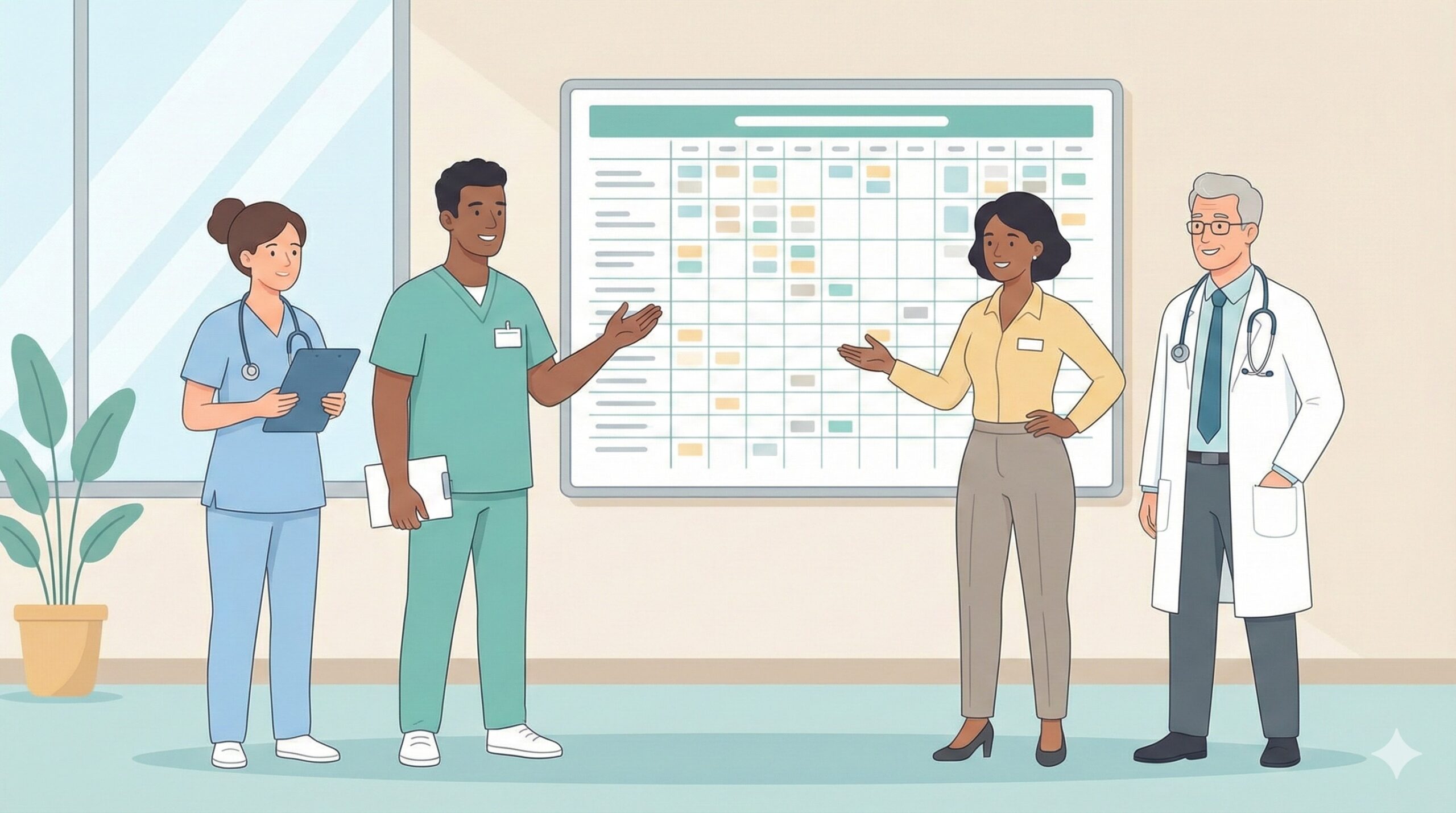
Ethical and interdisciplinary digitization
Since 2009, Saint-Pierre University Hospital has been gradually digitizing its operations. The approach is not top-down: it stems from a need identified in the field. A caregiver faced with allocation difficulties asked a simple but crucial question: how can we objectively measure a unit’s workload?
This question led to the creation of an initial workload measurement tool, which has been enhanced over time to include internship management, backup management, and training management. Each component addresses a problem identified by users, in a spirit of co-construction. Today, four complementary tools form the basis of an integrated approach to resource management.
This evolution is based on an ethical partnership between the hospital sector and the commercial sector. The logic remains the same: digital technology should not impose an organization, but rather support practices, promote collective intelligence, and reduce mental load.
Here, digitization is a means of refocusing professionals on their core business. By freeing up administrative time, streamlining communication, and making useful data accessible to all, it stabilizes the organization and reinforces perceived fairness.
Digitize to support care, not to control
The goal is to aid decision-making and collective consistency, not surveillance.
Co-construction: a condition for acceptance
When a tool addresses a real problem, it is adopted because it is useful, not because it is “mandatory.”
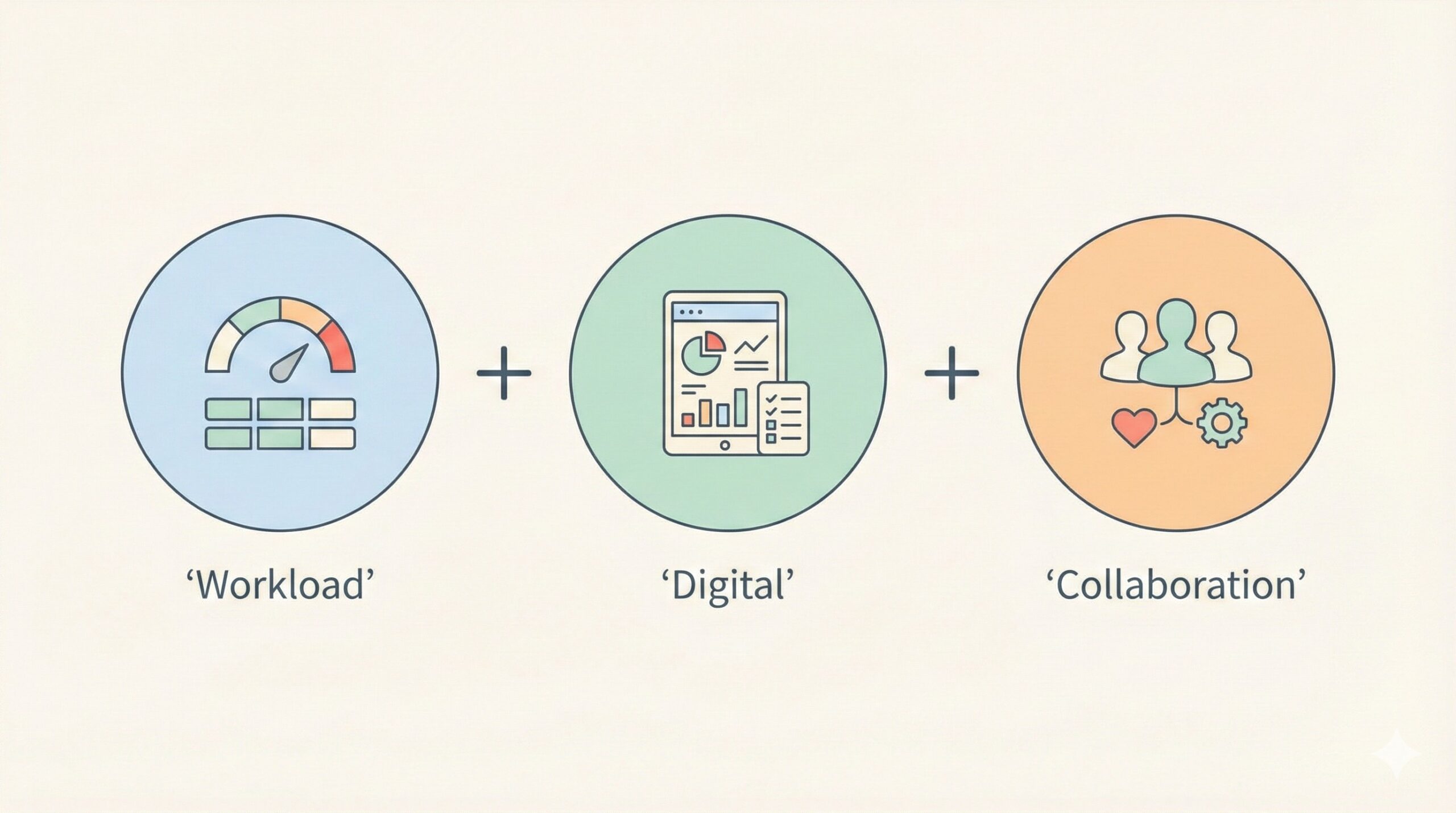
Proactive resource management
Integrated platforms provide executives and managers with a comprehensive, real-time overview of unit occupancy, staffing levels, absences, available reinforcements, and workload forecasts. This dynamic transparency allows for faster adjustments, better distribution of effort, and anticipation of tensions before they become critical.
The workload measurement tool is central. It is not limited to adding up procedures or ratios. It is based on an average derived from cross-referenced indicators defined with the establishment: number of patients, number of caregivers, procedures planned in the patient file, but also the team’s feelings.
Every day, a department representative assesses the perceived workload. At the same time, each team member freely assesses the atmosphere in the department. This qualitative data is incorporated into the overall measurement.
This basis allows for a 48-hour projection. The objective is to anticipate, adjust resources, and avoid invisible overloads. The goal is not control, but shared discernment: objectifying without reducing, forecasting without freezing.
Measuring activity + feelings to stay in touch with reality
The workload is not just about the number of tasks. It also depends on the context and collective energy.
Anticipating 48 hours in advance to prevent disruptions
Predictable management reduces the effects of “permanent urgency” and stabilizes commitment.
Comprehensive resource coordination
At the same time, other modules reinforce the dynamic:
- Internship management: fair planning, smooth integration of students, support for the training mission.
- Reinforcement management: coordination of mobile and external teams according to field needs, visibility of available resources.
- Training management: tailored planning, accessibility, educational continuity despite service constraints.
These interconnected tools give managers a global overview. They are a strategic lever for more responsive, fairer, and more humane governance. Above all, they enable the real work in the field to converge with institutional logic.
The care chain becomes transparent and manageable
Interns, reinforcements, training: everything is visible in one place, with the same decision-making rules.
Fairer governance through better information
Data does not make decisions. It enables humans to make better decisions.
Conclusion: creating more value with less exhaustion
Hospital digitization designed with, by, and for healthcare workers becomes a lever for ethical regulation. It makes the actual workload, the availability of skills, and future needs visible. It also facilitates the mobility of resources and the organization of internships.
In this context, collaborative management of the workload in healthcare is not an organizational option. It is an ethical requirement, a driver of sustainable commitment, and a prerequisite for quality.
By putting professional judgment back at the heart of decision-making, this approach creates more transparent, participatory, predictable, and sustainable environments. It is fully in line with the VBHC approach: producing more value for the patient, with less exhaustion for those who provide care.
Rethinking hospital management around strong interdisciplinarity between the nursing and digital sectors opens up concrete opportunities for maneuver. Taking care of caregivers means breathing new life into teams and restoring an organization that is both humane and resilient.